
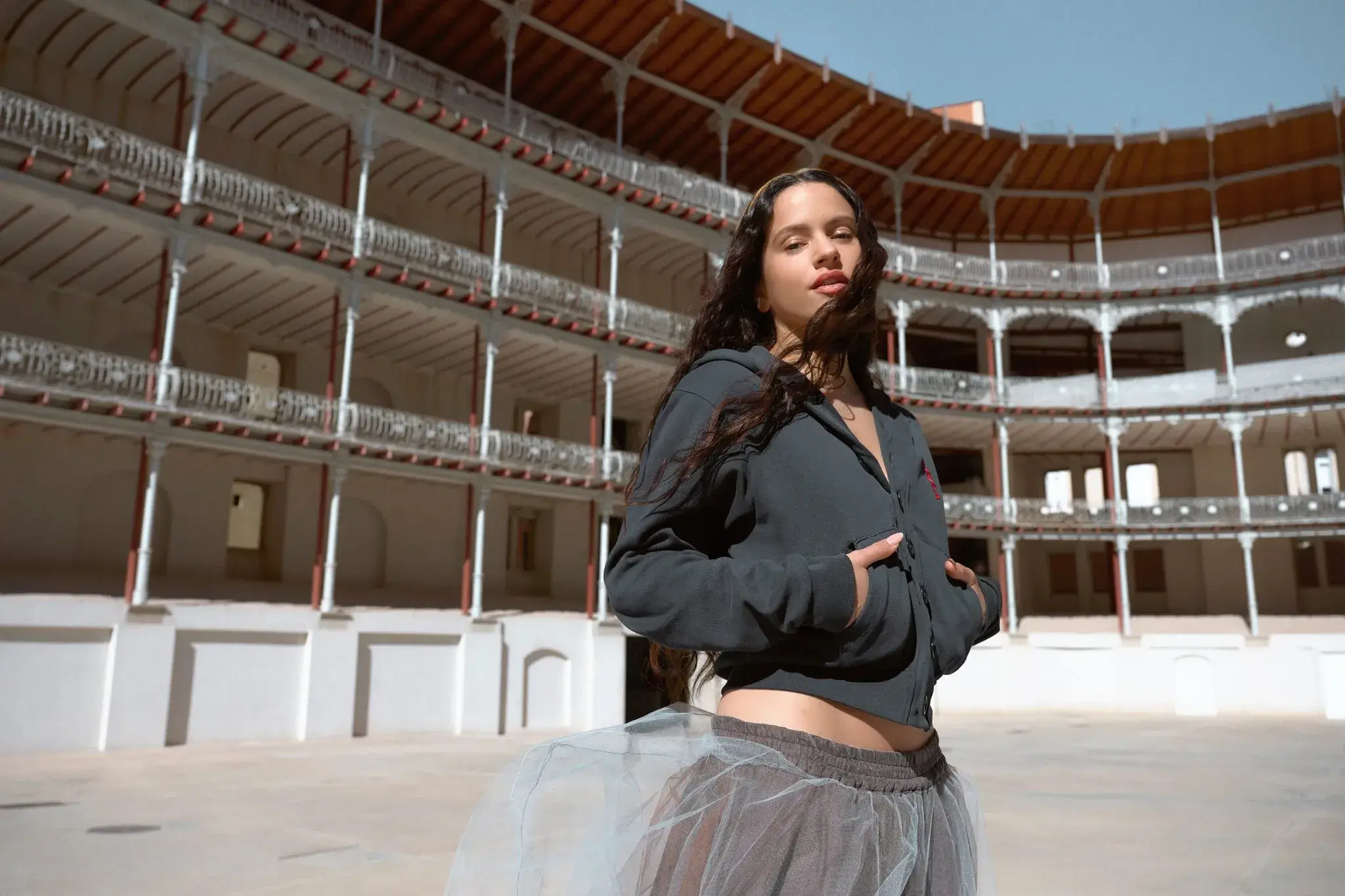
When I first heard Rosalía in a club in Barcelona, I assumed she was just like every other reggaeton artist — whose hits I was going to hear everywhere for the six months, before they disappeared.
I was dead wrong.
A friend convinced me to listen to her album Motomami. Though I found some of the sounds interesting, I grimaced and chose to explore elsewhere in Rosalía’s discography. What I found were two beautiful records, dripping with gorgeous flamenco. With El Mal Querer she somehow fused the traditional with the modern: flamenco with electro pop.
Then came Lux in 2025. Classical music, orchestral pop, flamenco… It gave her universal acclaim and global reach, because it was just so different. I wondered: how do you make something like that? Where does it come from?
Luckily, Rosalía is extremely generous and insightful when speaking about her creative process. She sat with Zane Lowe to unpack how Lux almost drove her to insanity, has been interviewed about creativity by Rick Rubin, and writes occasionally on her own Substack.
The latter is where I learned her process.
The 3 inevitable phases of Rosalía’s (and our own) creative work
Rosalía says her art filters through three phases:
Vómito intuitivo. The intuitive vomit.
La persistencia. The persistence.
El pulido. The polish.
Here’s a somewhat faithful translation from her Substack article:
I’d say there are three inevitable phases in making a record. The first is pouring it all out: a mix of play and vomit, born of intuition. The second is persistence: what’s more tedious than the middle of something? That elastic stretch—jealous, possessive, forever tempting you toward destruction. Finally comes the polishing: the stage where you devote yourself to smoothing and refining, despite being completely exhausted. And you’re only capable of doing it for one reason: because, after ten thousand stumbles and detours, you finally have a crystal-clear vision of the thing you’re working on. Just as a luthier would polish a guitar to correct the small scratches and signs of wear, restoring its surface sheen, you refine the work before you—perhaps bringing it closer to the original impulse, or perhaps carrying it somewhere entirely removed from it.
If you've ever tried to make something: a song, a story, an article, a pitch… you've no doubt lived all three of these phases.
Phase I: El Vómito Intuitivo (Intuitive vomit)
It’s not “the ideation phase” to Rosalía, nor "creative exploration.” It’s vomit.
And that tells you a lot about where authentic creativity come from: deep inside.
In preparation for Lux, Rosalía spent an entire year mostly alone: reading, writing, absorbing new curiosities. She pinned a world map to her wall and started learning about the lives of female saints and mystics across religions and cultures, as well as medieval nuns who were poets. These figures framed many of the ideas in Lux.
She writes (translated) that a record begins "invisibly, much before you touch any key, write any phrase, or sing any note”. It’s like a seed you didn’t know you were growing. That seed is what was growing when she locked herself away for a year, until she intuitively vomited what it meant to her back to the page.
Rick Rubin describes this phase as something similar in The Creative Act: the artist acting as the vessel, receiving an idea and then blurting it out, without overthinking or judging the outcome. The idea is not to chase it: but to wait and play, and it’ll arrive.
My concern is that we’re somehow losing this precious stage — instead outsourcing it to tools in the name of productivity. That’s why, when I write fiction or an article, I’ll use a pen and paper instead for the first draft. It’s my way of intuitively vomiting, after ruminating on the idea for days, weeks, sometimes years. The writing comes from inside, and from my inner curiosities, my prism of self.

This stage might be ugly. But give it time, and enjoy the purge.
When collaborators called Rosalía back to the studio, she refused. The lyrics weren't good enough yet, she said. She would stay until they were. Which meant she was already starting the second phase.
Phase II: La Persistencia (The persistence)
It’s hard to romanticise this part.
Rosalía asks a question she already knows the answer to: ¿Qué hay más aburrido que el medio de algo? — what’s more boring than being in the middle of something?
She calls la persistencia “the elastic stretch, jealous and inviting of destruction.” I find that so accurate. You've left the phase of purge and play and now the end of this thing is stretched out beyond sight. You read back what you first wrote, and it sucks. It feels like a mistake. You're in the middle of this sticky thing, and time is elastic. You’ll get to the end, someday, maybe. But when? Oh god, when?
Rosalía says making Lux nearly broke her. She forced a deadline on herself — “this album comes out this year” — and pushed through a process that, by her own account, brought her close to a breakdown. That's what persistence can cost. It’s goddamn work.
La persistencia requires commitment to see the work through. I’m in the middle of this phase right now with various stories, knowing I’m well past having intuitively vomited what was ‘a fun piece of writing.’ Now, I study it all like the writing isn’t mine. And that can hurt. But it makes the work better. Clearer. And you’ll realise when you’re ready to hit the final phase and make it shine.
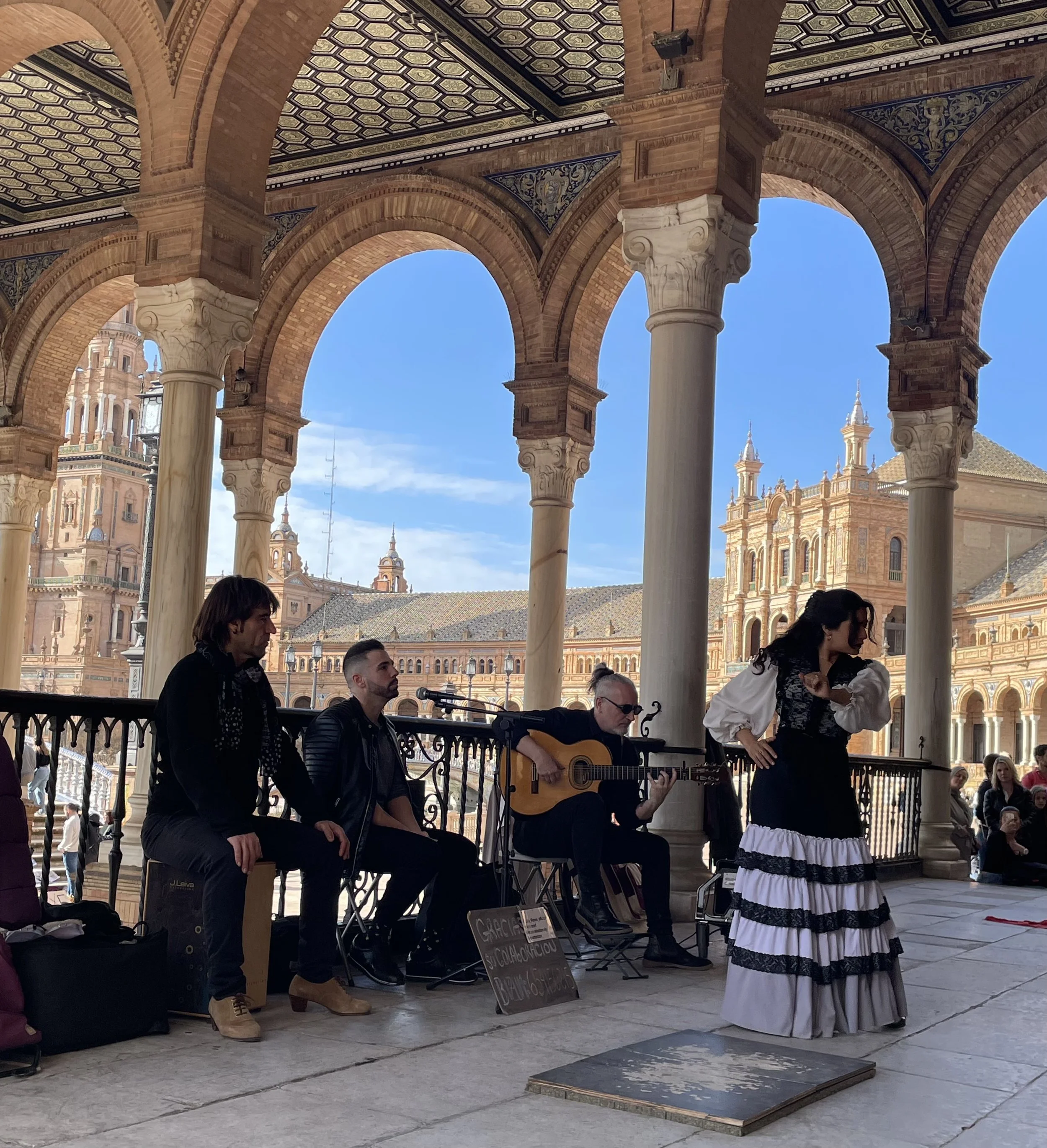
Photo by the author: Flamenco in Plaza de España, Sevilla.
Phase III: El Pulido (The polishing)
The final phase arrives after “diez mil tumbos” — ten thousand stumbles. And only after them do you reach what Rosalía calls a visión diáfana: a clear, beautiful view of what you've been making all this time.
El pulido is where you give smoothness to what you’ve made, despite being completely exhausted by it. This phase can feel infinite: there's always one more read-through, one more punctuation mark, one sentence that feels off.
“The resistance,” writes Steven Pressfield in The War of Art, “is most powerful at the finish line.” Rosalía pressed the vinyl of Lux before launching the digital, and still made changes after.
Other people's voices can also complicate things at this stage. I've been told a piece of fiction needed ‘a few thousand more words’ right when I thought it was 90% done. Maybe, but more likely than not, that person has a different relationship to the work and the length than I do. I believe el pulido isn’t about adding new stuff: it’s about reducing what’s there to let the work shine.
Rosalía says her sister — who is also her brand manager — will tell her when something isn't working, asking, “Why do you ruin the song?” It comes from a place of love, but in the final stages of the work, you need feedback from the right person. If it’s feedback you can trust, it’s irreplaceable.
Which phase are you facing?
I'm writing this while one short story sits in the vomit phase, a longer piece of fiction has hovered in la persistencia for five years, and a separate piece for the site is on its third round of polish.
All different phases, and different levels of “exhaustion”, as Rosalía puts it.
The error I’ve found is not knowing which phase I’m in. Trying to polish when something hasn’t gone through the rework of the persistence. Vomiting at the last minute when I should be polishing. And this is a hard skill, because Rosalía says that you know you're making something real because you can't see where it's going.
So I now ask: which phase am I in? What does it require from me now? More than the deadline, the feedback, the voice that answers needs to be my own.
And when it’s done, it’s time to, as Rosalía writes “soltar/saltar” — to let the piece go, to jump. The work is not yours anymore.